
Yes, and in 2026, it isn’t close. Homes staged by BA Staging & Interiors across Connecticut this year sold for an average of $97,000+ over asking price, went under contract in under two weeks, and returned an average 1,097% ROI on the staging investment — roughly $11 back for every $1 spent. We don’t think of that as “staging pays off.” We think of it as proof that how a buyer experiences a home changes what they’re willing to pay for it.
BA by numbers – 2026*
$97,000+
Under 2 weeks
$20M+
1,097%
Why This Matters
If you’re selling a home in Connecticut this year, you’re not just deciding whether to spend a few thousand dollars on furniture and decor. You’re deciding whether to leave money on the table. The gap between a home that sells at asking and one that sells $97,000 over it usually isn’t the house itself — it’s whether a buyer walked in and felt something, or just saw a room.
That distinction matters most in a market like Connecticut’s, where inventory is tight in towns from Greenwich to Guilford, buyers have more move-in-ready expectations than ever, and the cost of staging is a rounding error against what’s actually at stake in the final sale price.
What Buyers Actually See
Most sellers think about a room in terms of furniture and function. Buyers experience it very differently — and that gap is where offers are won or lost.
What the seller may see:
An empty bedroom.
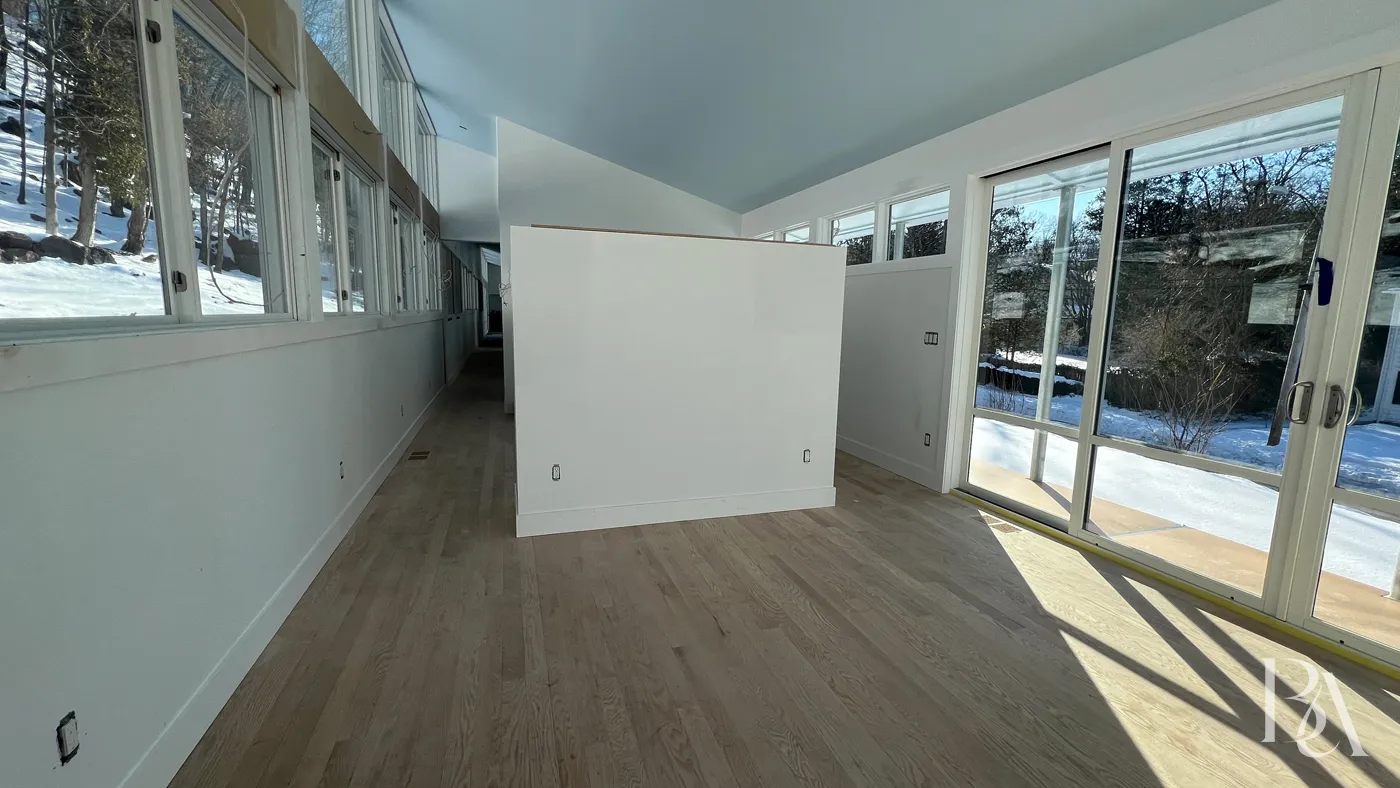
A room with no clear purpose, no sense of scale, and nothing to imagine themselves living in.
The BA Approach + The Experience
BA Staging & Interiors, led by Founder and Creative Director Birgit Anich, closes that gap using Neur-Allure™ — a proprietary neuroaesthetic design methodology grounded in design psychology and buyer-experience science, not just design taste.
In practice, that means every scale decision, sightline, color choice, lighting layer, and piece of furniture placement is made to shape how a buyer’s brain responds in the first few seconds of a walkthrough — the window where most of the emotional decision about a home actually happens, well before any logical comparison against other listings.
The goal isn’t just to make a room look good. It’s to design a specific experience: walking into a primary bedroom and immediately feeling calm and spacious, not “this room has a bed in it.” Walking into a kitchen and picturing a Sunday morning there, not just noting the countertop material. That’s the difference between staging a room and designing an experience — and it’s why BA’s Connecticut results this year run well ahead of general staging benchmarks.
✅ 83% of buyers’ agents say staging makes it easier for a buyer to picture the property as their future home.
✅ About 49% of sellers’ agents say staging reduces time on market.
✅ About 30% of agents say staging leads to offers 1%-10% higher than comparable un-staged homes.
The Proof
By the numbers, in detail:
By price point:
- On a mid-range listing, a staging investment in the low thousands can be the difference between an at-asking sale and a multiple-offer situation well above it.
- On a luxury listing ($1.25M+), where BA’s luxury vacant staging tier applies, the percentage ROI holds steady — but the absolute dollar upside scales with price, which is part of why staging is least optional at the top of the market.
By local market conditions:
What This Means for You
If you're a home seller
The math is straightforward — a staging spend of roughly $1,000–$5,000 against an average $97,000 swing in sale price isn’t a close decision, and Stage Now, Pay at Close means you don’t need cash upfront to make it.
If you're a Realtor
If you're a builder or developer
If you're a commercial client
Frequently Asked Questions
1. Is home staging worth it in Connecticut, or just in hot luxury markets like Greenwich?
2. Does staging work on occupied homes, or only vacant ones?
3. How much does home staging cost in Connecticut?
4. Do I have to pay for staging upfront?
5. How is Neur-Allure™ different from typical home staging?
6. What areas of Connecticut does BA Staging & Interiors serve?
BA’s Final Take
Buyers don’t simply walk through a home. They experience it. Staging that only rearranges furniture is decorating a room. Staging that’s designed around how a buyer’s brain actually responds to a space is what turns a showing into an offer — and in Connecticut this year, that difference has been worth an average of $97,000 per sale.
Ready to create the experience that gets result?
Residential Homes • Model Homes • Commercial Spaces