
Homes create urgency when buyers can quickly understand the space, connect with it emotionally, and picture themselves living there. Homes create hesitation when buyers have to work too hard to see the value.
Why Some Homes Create Urgency
Urgency does not come from making a home look expensive or filling every room with beautiful furniture.
It comes from clarity.
When buyers walk into a well-presented home, they should quickly understand how the space works. They can see where people would gather, how rooms connect, and which features make the property special.
That reduces uncertainty.
Instead of thinking, “How would I use this room?”, the buyer starts thinking, “I can see myself living here.”
That is a very different response.
A home that creates this kind of connection can feel more compelling because the buyer is no longer evaluating only the property. They are beginning to imagine their future in it.
What Creates Hesitation?
Hesitation often begins when buyers have to do too much mental work.
For example, an empty living room may technically be spacious. Yet without furniture, buyers may struggle to understand its scale or purpose.
An oversized sectional can have the opposite effect. It may make a perfectly comfortable room feel cramped.
A dining room with no visual connection to the kitchen may feel unusable. A beautiful architectural feature can also disappear if competing furniture or accessories pull attention elsewhere.
These details may seem small.
Together, however, they can change how a buyer experiences the home.
Buyers Notice More Than Furniture
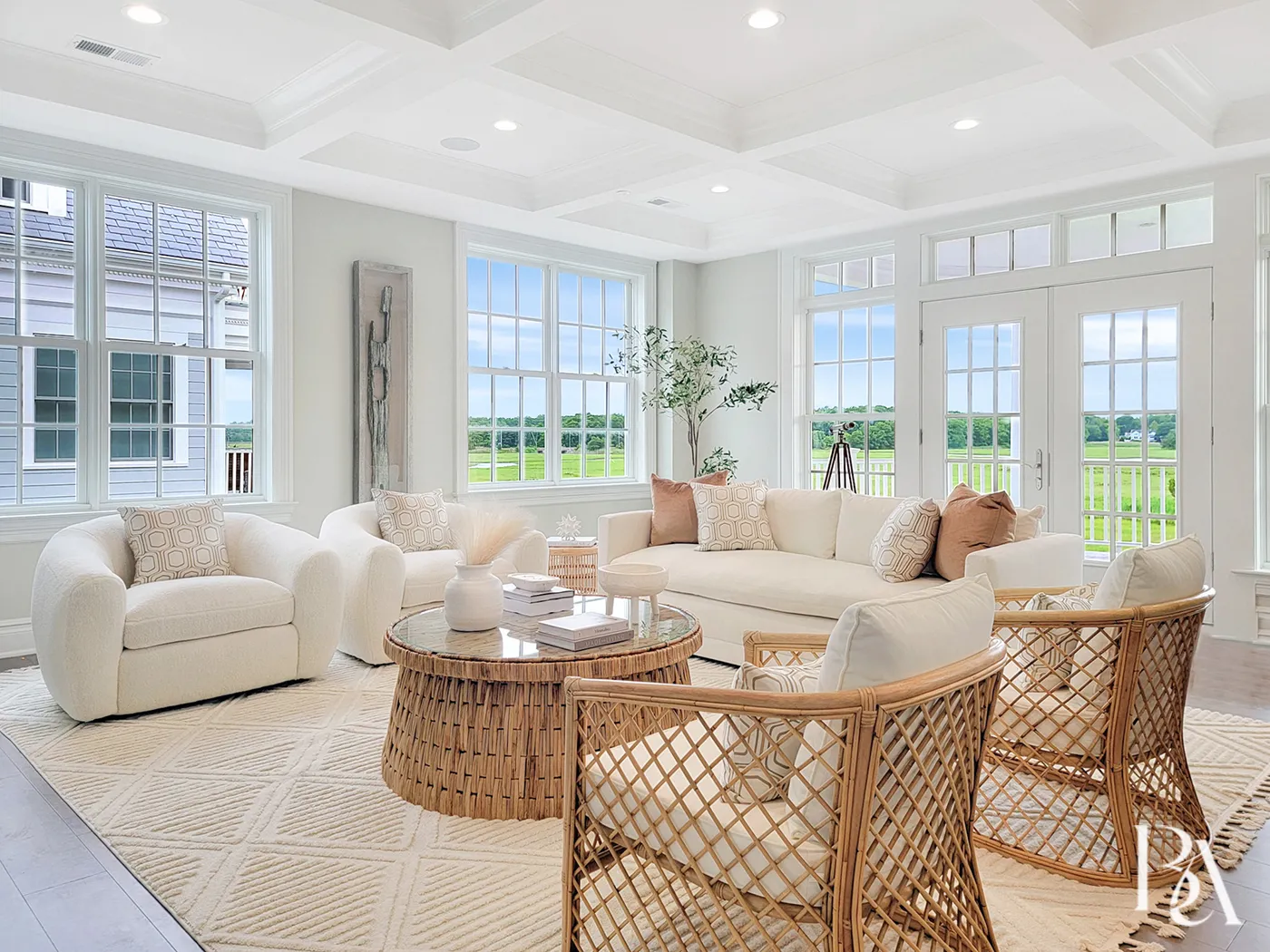
✅ Scale and proportion
✅ Furniture placement
✅ Traffic flow
✅ Focal points
✅ Lighting
✅ Color and texture
✅ Room function
✅ Visual connection between spaces
The goal is not simply to make each room attractive.
The goal is to make the entire home make sense.
The Psychology Behind the Experience
Buyers naturally look for cues that help them make decisions.
When a room feels organized and intentional, it becomes easier to process. When the layout is clear, buyers can focus on the property’s strengths instead of trying to solve design problems in their heads.
This is one reason strategic staging can be so powerful.
At BA Staging & Interiors, we consider these reactions through our Neur-Allure™ Method, which combines design, psychology, sensory details, and visual storytelling to shape the buyer experience.
Every choice should support the property.
A chair can show scale.
A rug can define a conversation area.
Lighting can draw attention toward an architectural feature.
Art can establish a focal point.
Nothing needs to be excessive. It simply needs to be intentional.
Home Staging Psychology in Action
Imagine a vacant primary bedroom.
The room may be large, but buyers have no reference point for the furniture it can accommodate. They may underestimate the space or focus on the wrong details.
Now imagine the same room with appropriately scaled furniture, balanced lighting, and carefully selected accessories.
The buyer immediately understands the room.
They can see where the bed belongs. They understand the available walking space. They can picture getting ready in the morning or relaxing at the end of the day.
The room has not changed.
The buyer’s understanding of it has.
That is the difference between decorating a space and strategically presenting a property.
The BA Approach
At BA, staging starts with the property rather than a furniture package.
We consider the architecture, layout, target buyer, condition, neighborhood, and strongest selling points.
A luxury property requires a different strategy from a starter home. A historic property needs a different approach from a modern new construction.
The question is always:
What does this home need the buyer to notice, understand, and remember?
That answer guides the staging decisions.
The result should feel natural, not manufactured. Buyers should notice the home first and the staging second.
What This Means for Sellers
If a property is generating showings but not strong buyer interest, it is worth looking beyond price.
Research from the National Association of REALTORS® also shows that staging can influence how buyers perceive a property and its value.
Ask what buyers are experiencing when they enter.
⏹️ Can they immediately understand the layout?
⏹️ Do the rooms feel appropriately scaled?
⏹️ Are the best features receiving attention?
⏹️ Does each space have a clear purpose?
⏹️ Can buyers picture their own lives there?
If the answer is unclear, strategic staging may help remove some of that hesitation.
The objective is not to convince buyers that the home is perfect.
It is to make the home’s existing value easier to see.
BA by numbers – 2026*
$97,000+
Under 2 weeks
$20M+
1,097%
So far in 2026, BA-staged properties have sold for an average of $97,000+ over asking and accepted an offer in less than two weeks.
BA has also reached more than $20 million in closed home sales so far this year, with an average 1,097% return on staging investment for clients.
These numbers continue to change throughout the year, but they demonstrate why presentation deserves to be treated as part of the selling strategy.
Frequently Asked Questions
1. Can staging really influence buyer decisions?
2. Why can a vacant home create hesitation?
3. Does staging matter if the home is already beautiful?
Yes. Even beautiful homes can benefit from better flow, proportion, focal points, and a presentation designed around the target buyer.
4. Is professional staging the same as decorating?
No. Decorating focuses mainly on personal style. Staging focuses on presenting the property in a way that helps potential buyers understand and connect with it.
BA’s Final Take
The difference between urgency and hesitation is often not a dramatic flaw in the property.
Sometimes, buyers simply need a clearer path to seeing its value.
Great staging removes the guesswork.
It helps buyers understand the space, notice what matters, and imagine what life could feel like inside the home.
And when that connection happens quickly, a property can stop feeling like another listing and start feeling like the one they do not want to miss.
Ready to Create a Stronger Buyer Experience?
Residential Homes • Model Homes • Commercial Spaces