
The BA Take
When sellers ask about home staging cost, the conversation often starts with furniture.
🤔 How much does the furniture cost?
🤔 How long will it stay?
🤔 What does delivery cost?
Those are fair questions.
But they only describe the most visible part of professional staging.
What you are really paying for is the strategy behind what buyers see, feel, and remember.
Professional staging combines design expertise, carefully selected inventory, logistics, buyer psychology, and visual storytelling to position a property for the market.
The furniture is simply one of the tools.
The experience is the real product.
Why Home Staging Cost Is About More Than Furniture
Buyers do not experience a home as a list of rooms, square footage, and features.
They experience it emotionally.
They notice whether a room feels welcoming. Whether the layout makes sense. Whether the home feels spacious, current, comfortable, and memorable.
According to the National Association of REALTORS® 2025 Profile of Home Staging, 83% of buyers’ agents said staging made it easier for buyers to visualize a property as their future home. (National Association of REALTORS®)
That is an important distinction.
An empty room shows a buyer what the space is.
A thoughtfully staged room can help them understand what life could feel like in that space.
What Buyers Are Really Seeing
Professional staging is designed around the way buyers experience a property.
They may not consciously notice every design decision, but they respond to the overall impression.
They may see:
- A living room that feels appropriately scaled and inviting
- A bedroom that communicates comfort and relaxation
- A dining area that immediately feels usable
- Architectural features that receive the attention they deserve
- A cohesive visual story from room to room
- Photography that makes the property more compelling online
- A home that feels intentional rather than simply furnished
In fact, NAR’s research found that buyers’ agents considered the living room, primary bedroom, and kitchen among the most important spaces to stage. (NAR)
That is why professional staging is not about putting something attractive in every corner.
It is about knowing what buyers need to see and experience.
What Are You Really Paying For?
1. Design Expertise
You are paying for someone who understands more than what looks good.
A professional stager considers scale, proportion, traffic flow, focal points, architecture, color, lighting, and how each room connects to the next.
A beautiful sofa in the wrong location can make a room feel smaller.
Too much furniture can make a large room feel crowded.
Too little furniture can make an expansive room feel cold or difficult to understand.
Professional staging is about knowing why something belongs there.
2. The Right Inventory
The next part of professional home staging cost is access to furniture and accessories selected specifically for the property.
Different homes require different strategies.
A contemporary home may call for clean, sophisticated furnishings.
A historic property may require a more thoughtful balance between character and modern appeal.
A luxury property needs furnishings and styling that support the quality, architecture, and lifestyle the home represents.
The inventory matters.
But knowing which pieces to use, where to place them, and what story they help tell matters even more.
3. Preparation and Execution
Professional staging is not simply a design consultation.
There is an entire process behind the finished room.
Depending on the project, this will involve:
- Property evaluation
- Design planning
- Furniture and accessory selection
- Inventory coordination
- Preparation and packing
- Delivery and moving teams
- Installation
- Styling
- Final adjustments
- Removal
- Warehousing
The finished room may look effortless.
Getting it there is anything but.
4. Buyer Psychology
This is one of the most valuable—and often overlooked—parts of staging.
Buyers do use logic when evaluating a home.
They look at price, location, square footage, condition, and features.
But emotion is a big part of the decision too.
How does the home feel?
Can they imagine living there?
Does the space feel like a place they would be proud to call home?
Professional staging considers those responses.
Where should the eye go first?
What should feel memorable?
How can an awkward space become easier to understand?
How can a home’s strongest features become the things buyers remember?
Those decisions shape the buyer experience.
5. The Story of the Home
Every property has a story.
Staging helps tell it.
Instead of presenting buyers with disconnected rooms, professional staging creates visual continuity throughout the property.
✅ The living room communicates how the home welcomes people.
✅ The dining area creates a sense of gathering.
✅ The bedroom communicates rest.
✅ The office demonstrates functionality.
✅ The outdoor space can become part of the lifestyle story.
The home begins to communicate not only what it is, but what life could look like there.
The BA Approach
At BA Staging & Interiors, we believe the investment of home staging should be viewed through the lens of the experience it creates.
We approach each property as an opportunity to design a buyer experience.
Our Neur-Allure™ Method brings together design psychology, sensory storytelling, and luxury merchandising principles to help shape how buyers perceive a property.
That means we look beyond:
“What furniture should go in this room?”
We ask:
What should the buyer notice?
What should they feel?
What should they remember?
And ultimately:
What will help them understand the value of this home?
Learn more about our professional home staging services and how BA approaches properties differently.
The Experience Behind the Finished Room
A professionally staged room can look simple.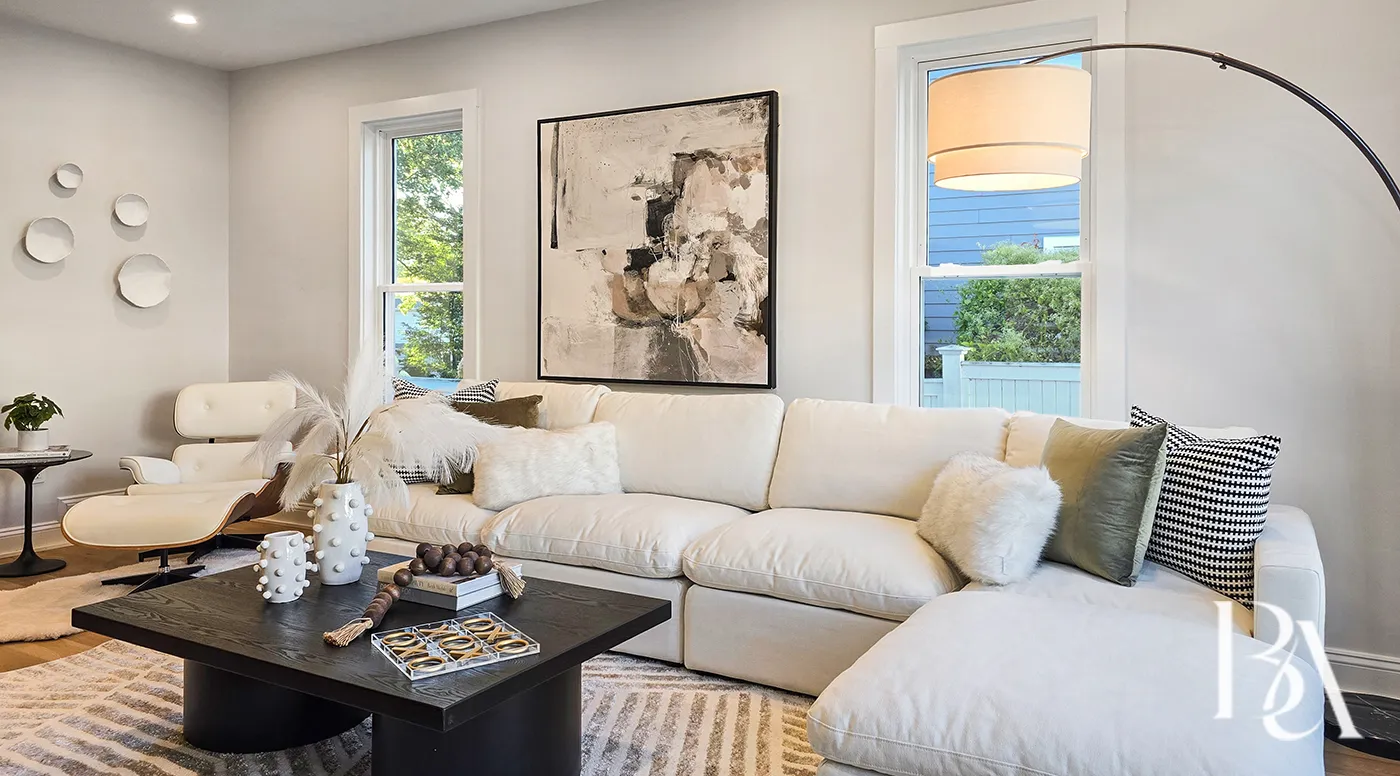
But the simplicity you see is the result of many decisions you do not see.
Furniture has been selected for scale.
The layout has been considered for movement.
Accessories have been edited.
Focal points have been established.
Colors have been coordinated.
The visual experience has been designed for both in-person buyers and the photographs that introduce the property online.
NAR’s 2025 research found that 73% of buyers’ agents considered photos important to their clients, while 57% identified traditional physical staging as important. (NAR)
That means staging does not begin when a buyer walks through the front door.
It begins when they first see the property online.
Home Staging Investment: Does It Make a Difference?
The ultimate question is not simply whether a home looks better.
It is whether the investment contributes to a stronger selling outcome.
NAR’s 2025 Profile of Home Staging found that 29% of real estate agents reported staging was associated with a 1% to 10% increase in the dollar value offered, while 49% of sellers’ agents reported that staging reduced the time a home spent on the market. (National Association of REALTORS®)
Those results do not mean staging guarantees a particular sale price or timeline.
Every property and market is different.
But they do reinforce an important point:
Staging is not simply decoration. It is part of how a property is positioned for the market.
BA by numbers – 2026*
$97,000+
Under 2 weeks
$20M+
1,097%
What This Means for Sellers
When comparing home staging pricing, it can be tempting to compare companies based solely on the number on the proposal. But price alone does not tell you what you are buying. Ask:- How will the property be evaluated?
- Is the staging customized to the architecture?
- Who is making the design decisions?
- What inventory will be used?
- How will the rooms photograph?
- Does the staging strategy reflect the property’s target buyer?
- What is included in installation and removal?
- Is there a plan for creating a cohesive experience throughout the home?
What Makes BA Different?
BA Staging & Interiors does not see staging as simply preparing a house for photographs. We see it as designing an experience around the property.Every decision
The furniture
The styling
The visual story
And the experience
That is why BA operates as Real Estate Experience Designers.
We are not simply asking how to make a room look good.
We are asking how to make the entire property feel right to the buyer.
Explore our home staging services or learn more about Stage Now, Pay at Close to see how BA can help make professional staging more accessible as part of your selling strategy.
Frequently Asked Questions
1. How much does home staging cost?
2. Is professional home staging worth the investment?
3. Can I stage my home myself?
4. Does staging help with listing photos?
5. What should I look for when choosing a staging company?
BA’s Final Take
So, what are you really paying for when you stage a home?
Not furniture.
You are paying for perspective.
You are paying for expertise.
You are paying for strategy.
You are paying for the details buyers may never consciously notice—but absolutely experience.
And ultimately, you are investing in the moment when a buyer walks through the door and thinks:
“I can see myself living here.”
That is what professional staging is designed to create.
Ready to Create a Stronger First Impression?
Residential Homes • Model Homes • Commercial Spaces